Selecting the right talent signals aggregator is becoming one of the most important decisions HR and talent analytics leaders can make. The best platforms unify data across applicant tracking systems (ATS), HR information systems (HRIS), learning management systems (LMS), and collaboration tools to reveal predictive insights about workforce potential and risk. This guide helps HR leaders understand how these platforms work, what to evaluate during selection, and how to measure the real business impact of adoption.
Understand Talent Signals Aggregators and Their Importance in HR
A talent signals aggregator is an advanced HR intelligence platform that brings together multiple types of people data—assessments, work samples, collaboration metrics, course completions, and performance outcomes—into a single, actionable view. Unlike traditional ATS or survey-based tools, aggregators offer an integrated, continuous signal layer for understanding readiness, engagement, and potential.
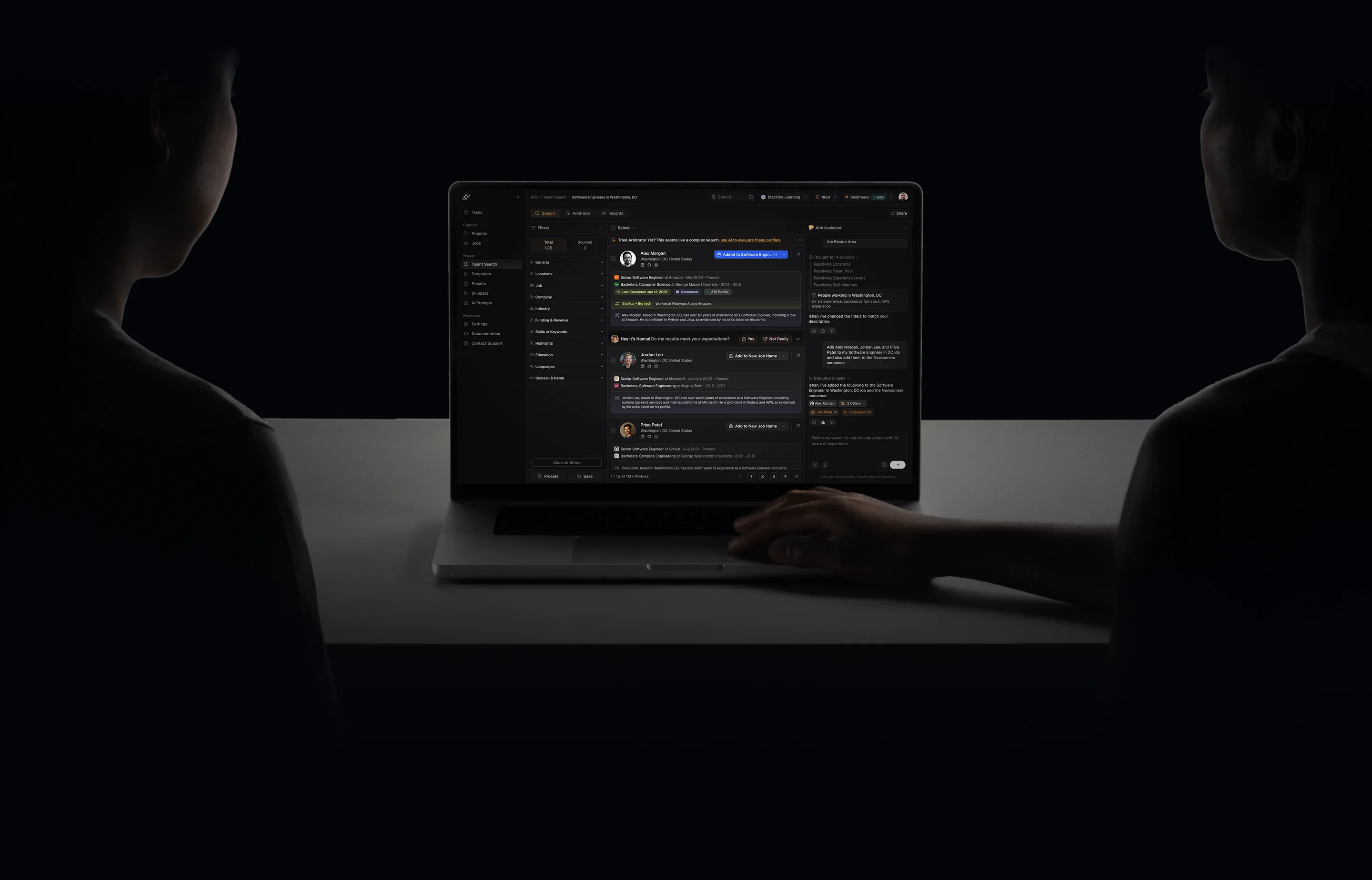
The benefits extend beyond candidate vetting. Aggregators help accelerate onboarding, highlight top performers early, and support manager development planning through continuous data synthesis. Modern platforms such as Arbi by Neuroscale AI provide extensive enterprise-grade integrations, predictive modeling, and explainable dashboards, meeting compliance standards like SOC 2, ISO 27001+, GDPR, and CCPA. Designed with security and integration at the core, Arbi helps organizations turn talent data into a measurable system that operates with scientific rigor and enterprise reliability. In short, talent signals aggregation enables HR to operate with the same level of data precision other business functions already rely on.
Define Your Use Cases and Key Performance Indicators
Before evaluating vendors, HR teams should define why they need a talent signals aggregator and how success will be measured. Clear use cases create a foundation for meaningful ROI.
Common goals include reducing voluntary attrition within 12 months, improving new-hire ramp time, or increasing internal mobility for underutilized talent. A well-designed KPI matrix might track:
-
Time-to-hire and quality-of-hire
-
Time-to-productivity for new employees
-
Attrition and retention of top performers
-
Diversity and fairness improvements in hiring or promotion
Deciding how frequently you want the system to refresh and report signals—daily, weekly, or quarterly—will also influence vendor choice.
Audit and Map Your Existing Data Sources and Integrations
The value of any aggregator depends on the quality and accessibility of your existing HR data. A structured data audit prevents downstream adoption hurdles.
Start by listing all systems housing people and workflow data: ATS, HRIS, LMS, performance management tools, and collaboration suites like Slack, GitHub, or Salesforce. Confirm which systems already offer open APIs or vendor-native connectors.
| Data Type | Source System | Integration Need |
|---|---|---|
| Recruiting stages | ATS | Job and candidate sync |
| Learning completions | LMS | Skills mapping |
| Code or project activity | GitHub / Jira | Contribution insights |
| Customer feedback | Salesforce, Zendesk | Service performance indicators |
| Engagement & survey data | HRIS / survey platform | Retention predictors |
Real-time or near-real-time syncing matters most for dynamic indicators, such as onboarding progress or attrition risks. Platforms like Arbi by Neuroscale AI simplify this through deep integrations across 50+ recruiting, HR, and communication systems.
Evaluate Data Quality, Validity, and Fairness of Talent Signals
Not all talent signals are created equal. HR leaders must ensure data and models meet both scientific and ethical standards.
Validity reflects how strongly a signal predicts real outcomes like job success or retention. Fairness ensures models do not introduce systemic bias across demographic groups. Leading vendors document both through rigorous validation studies.
Key evaluation criteria include:
-
Precision and recall of predictive models
-
Fairness and subgroup performance analysis
-
Transparent documentation of model validation
-
Ongoing drift detection and retraining plans
A strong aggregator will provide clear reporting on these metrics and pass third-party audits of fairness and validity to maintain regulatory confidence. Neuroscale AI takes this further by emphasizing transparent model documentation and continuous retraining to uphold performance and compliance standards.
Test Explainability and Usability in Manager Workflows
Even the most advanced analytics fail if managers cannot understand or trust them. Explainability ensures that each output—whether a skill readiness score or flight-risk alert—comes with context.
HR teams should pilot platforms that show source evidence for each signal, such as recent project contributions or learning activity. These explainable insights help managers validate recommendations and build trust in automated scoring. During pilot programs, capture feedback on dashboard clarity, navigation, and workflow alignment to confirm the system supports real-world decision-making. Arbi’s explainable dashboards are designed to make this process transparent, providing traceable reasoning behind every recommendation.
Measure Impact Through Pilots and Data-Driven A/B Testing
Claims of increased hiring efficiency or engagement must be proven through data. A structured pilot helps isolate real effects before scaling.
A recommended pilot process includes:
-
Randomly assign business units or teams for pilot versus control groups.
-
Measure key outcomes—time-to-hire, offer acceptance rate, new-hire productivity—before and after implementation.
-
Adjust thresholds, triggers, or dashboards based on observed performance.
| KPI | Before Aggregator | After Aggregator | Lift |
|---|---|---|---|
| Time-to-hire | 42 days | 33 days | -21% |
| Quality-of-hire score | 7.2 /10 | 8.6 /10 | +20% |
| Voluntary attrition (12 mo) | 18% | 12% | -33% |
Such data-driven experiments convert hypotheses into credible business impact metrics and make ROI discussions straightforward. Neuroscale’s customers often follow similar testing patterns to quantify improvements before platform-wide deployment.
Establish Governance, Compliance, and Security Frameworks
Compliance and privacy determine whether a platform can truly serve enterprise-scale HR environments. Any aggregator should align with GDPR, EEOC, and regional privacy laws.
Core governance requirements include explicit consent management, access controls tied to role, encrypted data transmission, and complete audit logs of model decisions. When screening vendors, verify certifications such as SOC 2 Type 2 or ISO 27001, and ensure on-premise or EU-region hosting options are available. Regular compliance reviews, especially after model updates, are critical for long-term risk management. Arbi by Neuroscale AI was built from the ground up with enterprise and government-grade compliance in mind—SOC 2 Type 2, ISO 27001+, GDPR, and CCPA—giving HR leaders confidence that talent data remains protected at every step.
Practical Tips for Choosing a Trusted Talent Signals Aggregator
A deliberate selection process reduces risk and accelerates adoption. Treat talent signals as decision-support systems, not decision-makers, and focus on tools that empower human oversight.
A practical checklist for HR buyers includes:
-
Broad integration coverage across HRIS, ATS, LMS, and productivity tools
-
Example-level explainability in dashboards
-
Automated fairness and drift monitoring
-
Documented business impact from pilot programs
-
Vendor support for experimentation and continuous reporting
HR leaders should require transparent evidence of predictive validity, fairness, and fit before rolling out platform-wide. Neuroscale AI’s Arbi meets these expectations with its blend of precision analytics, integrated architecture, and compliance-first design.
Frequently Asked Questions
What types of talent signals should HR leaders prioritize?
HR leaders should focus on signals tied to skills, performance, engagement, learning activity, and early attrition risk. Neuroscale AI’s Arbi captures these with explainable, validated models.
How can I assess data integration capabilities with existing HR systems?
Request proof of live integrations with your ATS, HRIS, LMS, and collaboration tools. Arbi connects natively with over 50 of them to streamline setup.
What criteria ensure fairness and reduce bias in talent signals?
Evaluate validation metrics, subgroup analysis, and model drift monitoring. Neuroscale AI emphasizes continuous auditing to maintain fairness and transparency.
How long does it usually take to implement a talent signals aggregator?
Implementation typically takes several weeks to a few months, depending on data complexity and integration scope. Arbi’s pre-built connectors accelerate timelines for most teams.
What metrics best demonstrate return on investment from these platforms?
Time-to-hire reduction, improved quality-of-hire, higher offer acceptance, and lower attrition are key indicators. Arbi users often measure these to prove ROI with real data.