On September 11, 2026, Pin's CEO Steve published a short note acknowledging something recruiters using the platform had already noticed: Pin's LinkedIn company page and the CEO's own LinkedIn profile had gone dark. In his words, "LinkedIn's team raised concerns about our presence on their platform. We are working with them to resolve it." Pin has not disclosed the specific concern, and LinkedIn has not commented publicly. As of publication, the situation is unresolved.
Whatever the exact cause turns out to be, the timing is worth sitting with. Pin's own blog content is built extensively around LinkedIn outreach automation, including detailed breakdowns of LinkedIn's InMail limits, credit systems, and messaging cadences. That same content is explicit that LinkedIn's User Agreement, Section 8.2, prohibits "bots or other unauthorized automated methods" for scraping, contact collection, or messaging, and that LinkedIn permanently banned multiple third-party automation tools in 2025 for violating it. None of that confirms why Pin's own presence was pulled. It does confirm that operating close to that line is a known, acknowledged risk in this specific product category, one Pin has itself written about at length.
The pattern underneath the headline
This is not really a story about one company's LinkedIn page going down. It's a reminder of a structural risk that sits underneath a whole class of AI recruiting tools: platforms whose sourcing and outreach depend on LinkedIn's graph, LinkedIn's messaging rails, or LinkedIn's tolerance for automated activity are, by construction, one enforcement decision away from losing a core piece of their product.
That risk does not show up in a demo. It shows up months later, when a platform a recruiting team has built workflows around suddenly loses a channel, a data source, or its own public presence, with no warning and no recourse, because the dependency was never really the vendor's to control in the first place.
What this means for a buyer evaluating AI sourcing tools
Most evaluation checklists for AI recruiting platforms focus on data coverage, screening quality, and price. A less common but increasingly relevant question: where does the platform's candidate data actually come from, and does the platform's core function depend on a third party's continued permission?
A few questions worth asking directly in a vendor evaluation:
-
Does the platform maintain its own independent candidate database, or does its sourcing function depend on live access to another platform's data?
-
If LinkedIn (or any single data source) changed its access terms tomorrow, would the tool still function?
-
Is outreach routed through channels the vendor fully controls (email, its own messaging infrastructure), or through a third-party platform's messaging system that could restrict or ban the account?
-
Has the vendor publicly documented how its data sourcing complies with the terms of the platforms it touches?
Where Arbi sits on this specific risk
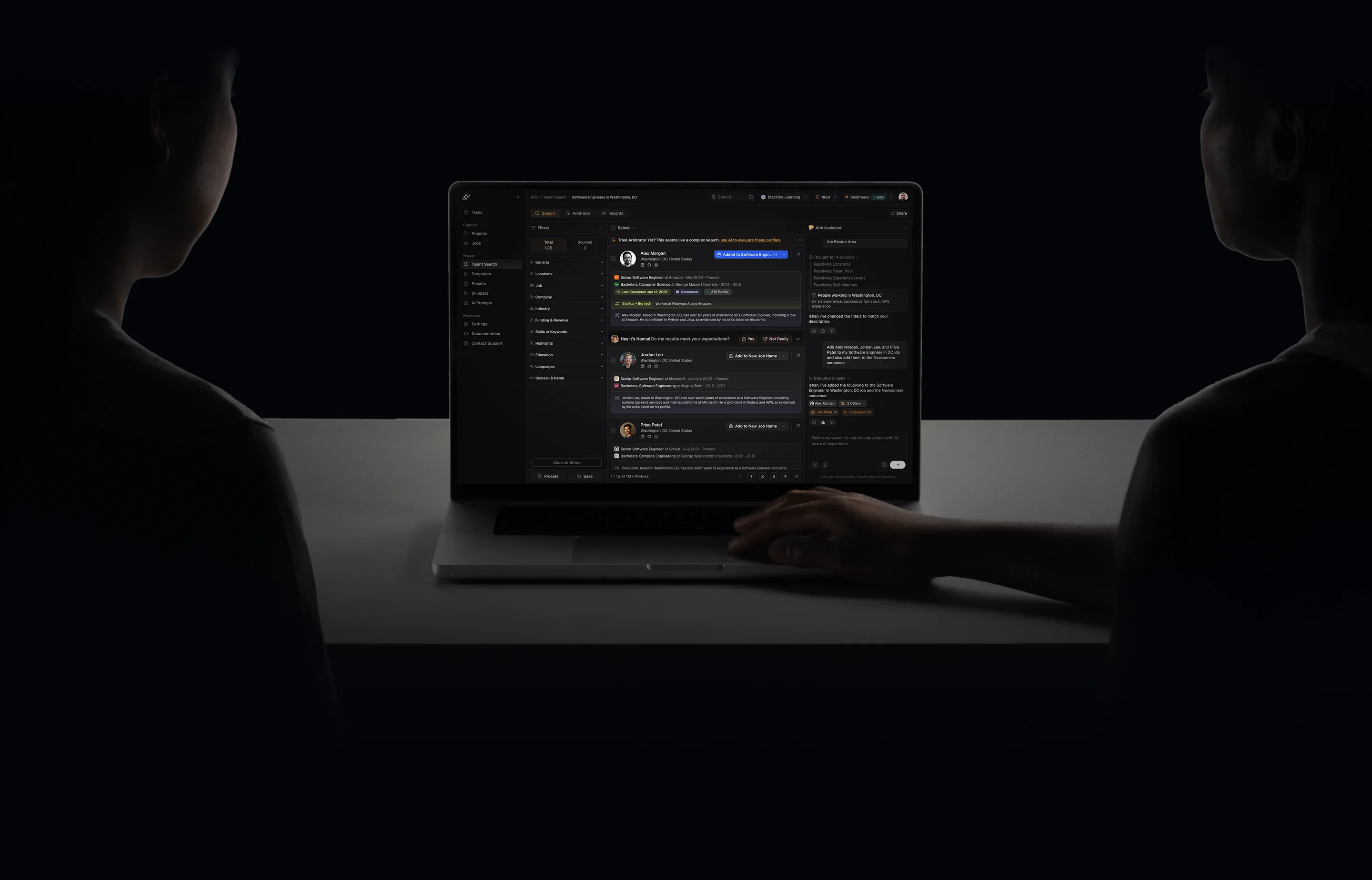
Arbi, Neuroscale AI's recruiting operating system, searches more than 900 million candidate profiles from its own independent data infrastructure rather than depending on live scraping or automation of any single third-party platform. Outreach sequences run from a recruiter's own mailbox across email and LinkedIn, with replies consolidated into one inbox, rather than routing messaging through automated LinkedIn account activity that risks enforcement.
This is not a claim that Arbi is immune to every platform-level risk in the industry. It is a narrower, verifiable point: a recruiting system that owns its own data layer and keeps outreach attributable to a real individual mailbox has fundamentally less exposure to a single platform's enforcement decisions than a tool whose core sourcing or messaging function depends on automating that platform directly.
What to watch next
Pin's situation is still developing, and this article will look different in a month depending on how it resolves. The useful takeaway for a hiring team evaluating tools today is not "avoid Pin." It's that platform dependency is now a real, demonstrated line item in vendor risk, not a hypothetical one, and it belongs in the same evaluation conversation as data coverage and screening accuracy.
Frequently asked questions
Was Pin banned from LinkedIn?
Pin's company page and its CEO's personal profile became unavailable on LinkedIn around September 2026. Pin's CEO stated that LinkedIn "raised concerns" about Pin's presence on the platform and that the two companies are working to resolve it. Neither company has publicly confirmed the specific cause, and the situation was unresolved as of this article's publication.
Does this affect Pin's core product?
According to Pin's own public statement, its platform remains fully operational and customer accounts are unaffected; the change is specific to Pin's presence on LinkedIn itself, not Pin's product infrastructure.
Why does LinkedIn restrict third-party recruiting tools?
LinkedIn's User Agreement (Section 8.2) prohibits bots, scrapers, and unauthorized automated methods for accessing profiles, collecting contacts, or sending messages. LinkedIn has publicly enforced this against multiple automation vendors, including permanent bans in 2025.
How does Arbi avoid this kind of platform risk?
Arbi sources candidates from its own independent database of 900+ million profiles rather than depending on live scraping or automated access to LinkedIn, and outreach runs from a recruiter's own mailbox rather than through automated LinkedIn messaging activity that risks account-level enforcement.
What should a recruiting team ask a vendor about this risk before buying?
Whether the platform's core sourcing function depends on continued access to a single third-party platform, whether outreach is routed through infrastructure the vendor controls, and what happens to the team's workflow if that third-party access were restricted tomorrow.