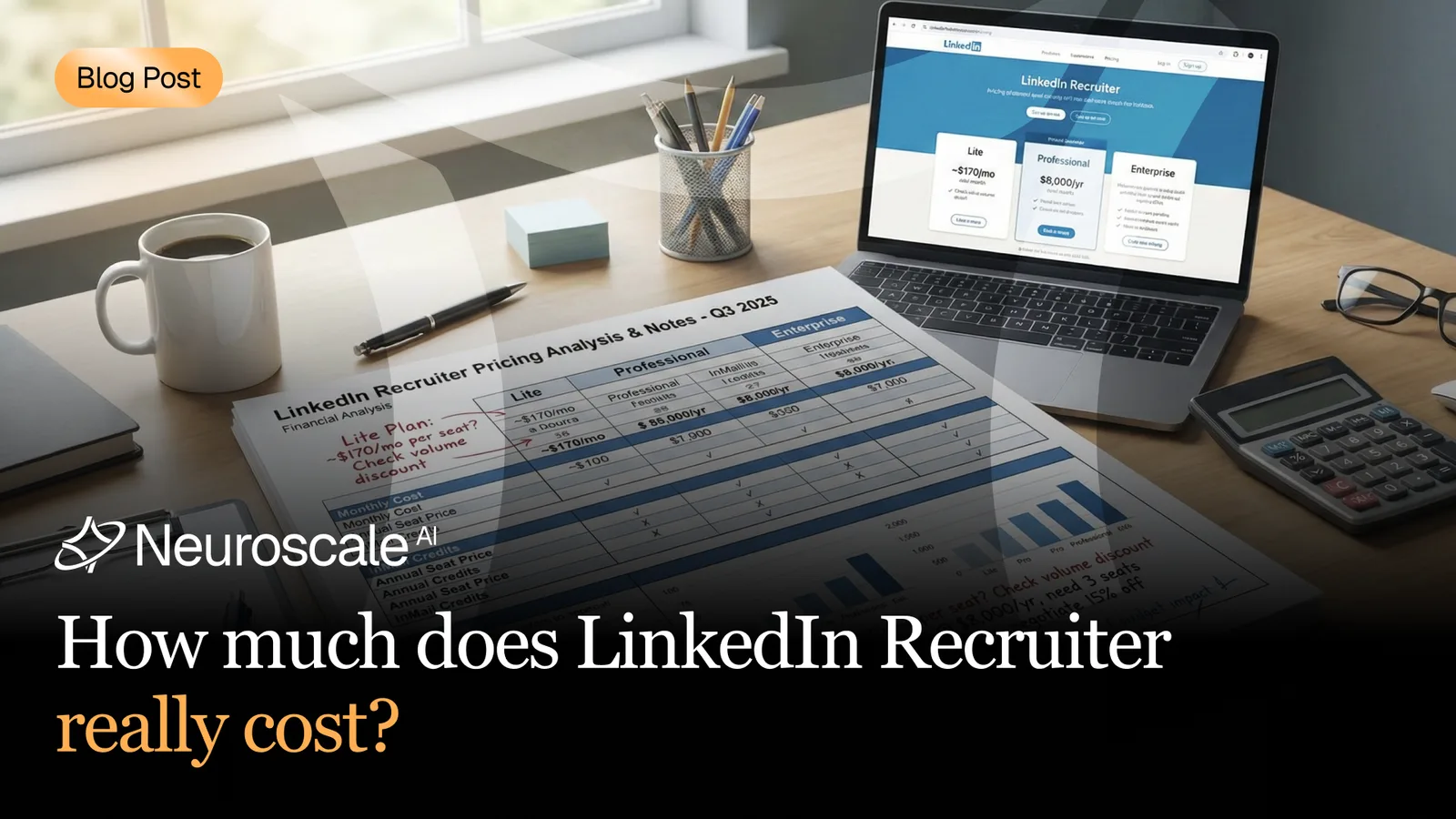
LinkedIn Recruiter is one of the most widely used recruiting tools in the world. But if you're evaluating it seriously, you've probably noticed something frustrating: there's no simple pricing page. No clear public numbers.
So how much does LinkedIn Recruiter actually cost? And more importantly: is it worth what teams end up paying?
Let's break it down.
The Sticker Price: What You'll Actually Pay
LinkedIn Recruiter pricing is sold on an annual, per-seat basis, and the exact cost depends on a few factors:
- Which product tier you choose
- How many licenses you need
- Whether you're SMB or enterprise
- What region you're buying from
- What level of data access and integrations you require
In most cases, teams encounter three core offerings:
LinkedIn Recruiter Lite (lighter sourcing access) LinkedIn Recruiter Professional LinkedIn Recruiter Corporate (enterprise-grade)
While LinkedIn doesn't publish fixed pricing, market benchmarks and buyer reports consistently place LinkedIn Recruiter licenses in the thousands of dollars per seat, per year; with enterprise contracts often running significantly higher once volume, add-ons, and multi-seat packages are included.
But the license fee is only the surface cost.
The Hidden Cost: Recruiter Time
When teams ask "How much does LinkedIn Recruiter cost?" they're usually thinking about the invoice. But the much larger cost sits underneath.
They're not thinking about:
- Hours spent building searches
- Hours spent refining filters
- Hours spent reviewing profiles
- Hours spent exporting leads
- Hours spent writing outreach
- Hours spent managing replies
LinkedIn Recruiter is fundamentally a manual sourcing tool. Which means every dollar you pay for the license is multiplied by recruiter time.
If your main challenge is access to candidates, it does its job well. But it was never designed to be a complete hiring system.
The Shift: From Access to Infrastructure
Here's what's becoming increasingly clear:
Modern recruiting teams are separating two distinct needs:
- Data access (where candidates exist)
- Hiring infrastructure (how hiring actually runs)
LinkedIn Recruiter largely addresses the first.
But teams are realizing they need both, and that sourcing tools alone don't solve the workflow problem.
What Comes After Access
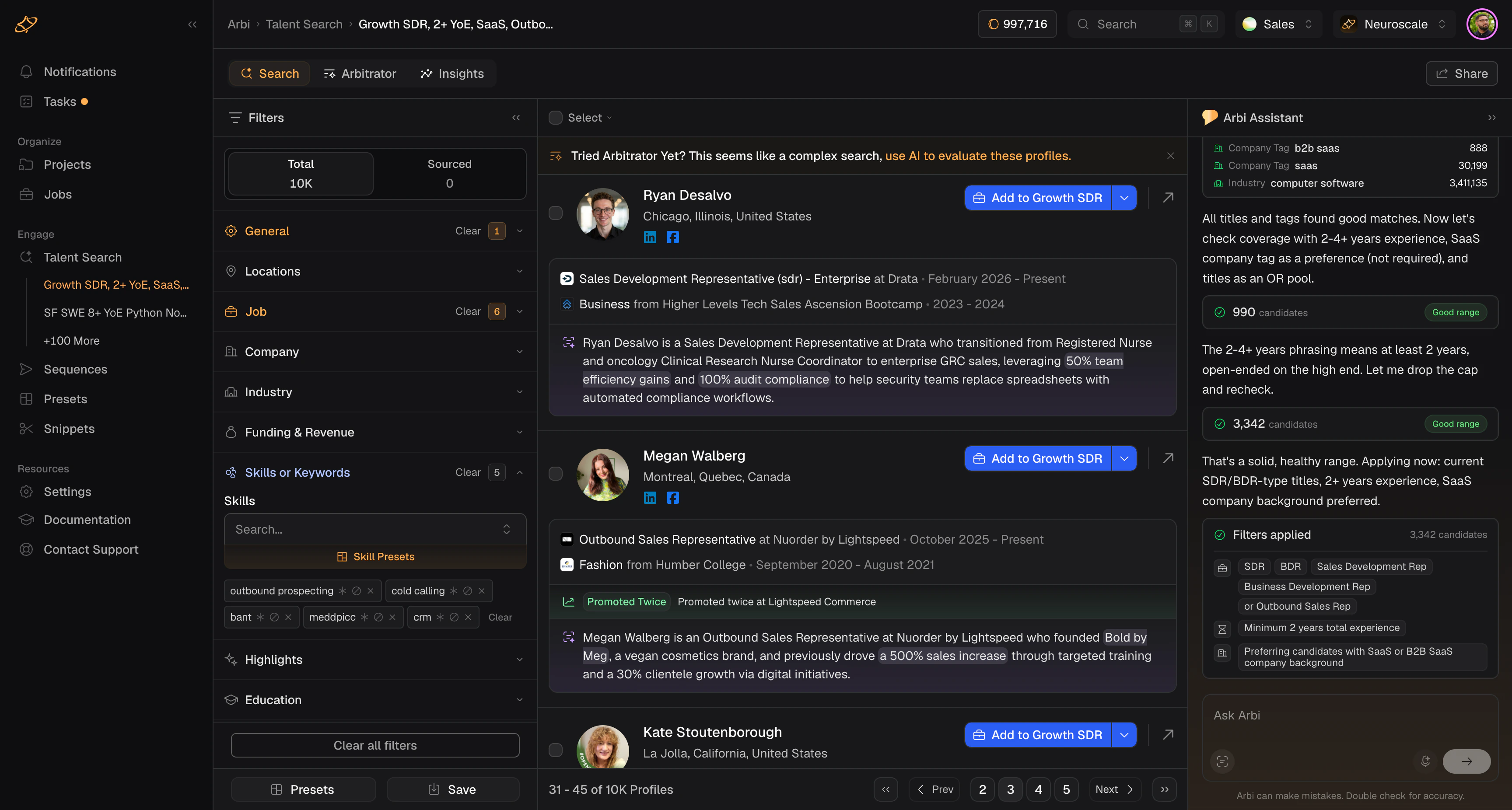
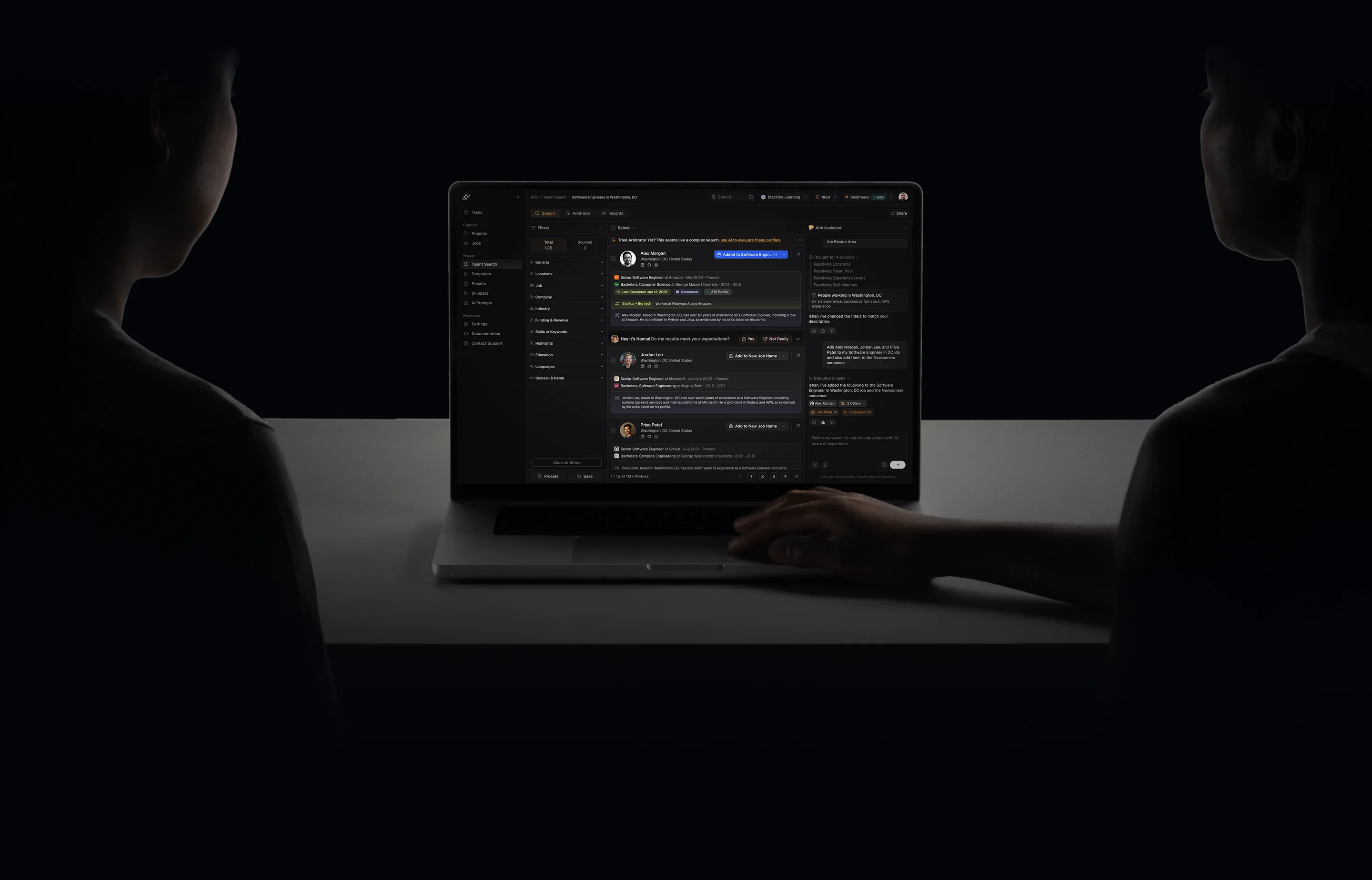
Platforms like Neuroscale Arbi are being adopted to solve the infrastructure layer.
Instead of acting as another search interface, Arbi is designed as an always-on hiring engine that:
- Continuously maps talent markets
- Evaluates candidates based on real signals (not just keywords)
- Builds and refreshes pipelines automatically
- Runs personalized outreach at scale
- Handles early-stage conversations
- Feeds recruiters warm, qualified talent
The goal isn't to replace recruiters or tools like LinkedIn Recruiter.
It's to remove the compounding manual work that makes sourcing tools expensive to operate at scale.
The Real Question
LinkedIn Recruiter's price is measurable.
The cost of running hiring manually? That's much harder to see; but far larger.
As recruiting shifts from isolated searches to continuous systems, more organizations are looking beyond sourcing tools alone and toward platforms that turn hiring into infrastructure.
Not because access is solved, but because access without structure just creates bigger piles of work.
See How It Works
Want to understand what happens when sourcing, evaluation, and outreach run in the background, while your team focuses on hiring decisions, not search screens?
Book a demo to see how Arbi by Neuroscale handles the infrastructure layer: [email protected]. No lengthy demos, no sales theater, just a clear look at what automated hiring infrastructure actually means.
About Neuroscale AI: Neuroscale AI builds Arbi, an AI-powered hiring infrastructure platform designed to turn sourcing, evaluation, and outreach into continuous background processes. The company believes recruiting should feel less like manual labor and more like systems that run themselves. Learn more at neuroscale.ai.