Modern hiring demands precision, speed, and fairness—and AI is delivering all three. The most effective organizations now use AI-driven resume screening and personalized candidate outreach to identify high-quality, diverse talent faster than ever. By uniting automation, language models, and compliance-ready data orchestration, recruiters can transform manual review cycles into seamless, data-driven recruiting operations. This article explores how today’s leading AI systems, such as Arbi by Neuroscale, accelerate sourcing, elevate candidate engagement, and ensure every hire supports long-term business goals.
The Evolution of Recruitment Through AI
Artificial intelligence has turned recruitment from paperwork and manual filtering into an orchestrated system of insight-driven automation. Precision recruiting—the use of data to pinpoint candidates who best align with a role’s requirements—has replaced guesswork. Equally important is orchestrated intelligence: connected AI agents coordinating sourcing, screening, and outreach for a unified, measurable hiring process.
What began as simple keyword scanning has evolved into platforms that interpret context, assess soft skills, and deliver quantifiable efficiency. AI screening can reduce review costs by up to 75% and cut time-to-hire from weeks to days. Nearly every Fortune 500 company employs algorithmic assistance in hiring, confirming the mainstream adoption of scientifically designed, AI-powered recruitment systems.
How AI Transforms Resume Screening
AI resume screening automatically parses, ranks, and scores resumes using natural language processing and machine learning. Instead of reading each document manually, recruiters receive a shortlist matched to specific skills, experiences, and qualifications.
The process identifies 10 to 15 high-fit candidates out of hundreds by interpreting context beyond keyword matches. Recruiters report saving 10 to 15 hours weekly with AI assistance, while parsing accuracy typically reaches 60–70%.
| Step | Manual Screening | AI-Assisted Screening |
|---|---|---|
| Average review time | 7 seconds/resume | Thousands in seconds |
| Candidates surfaced | 100+ | ~15 high-fit |
| Accuracy range | Variable | 60–70% parsing accuracy |
| Cost/time savings | Baseline | Up to 75% reduction |
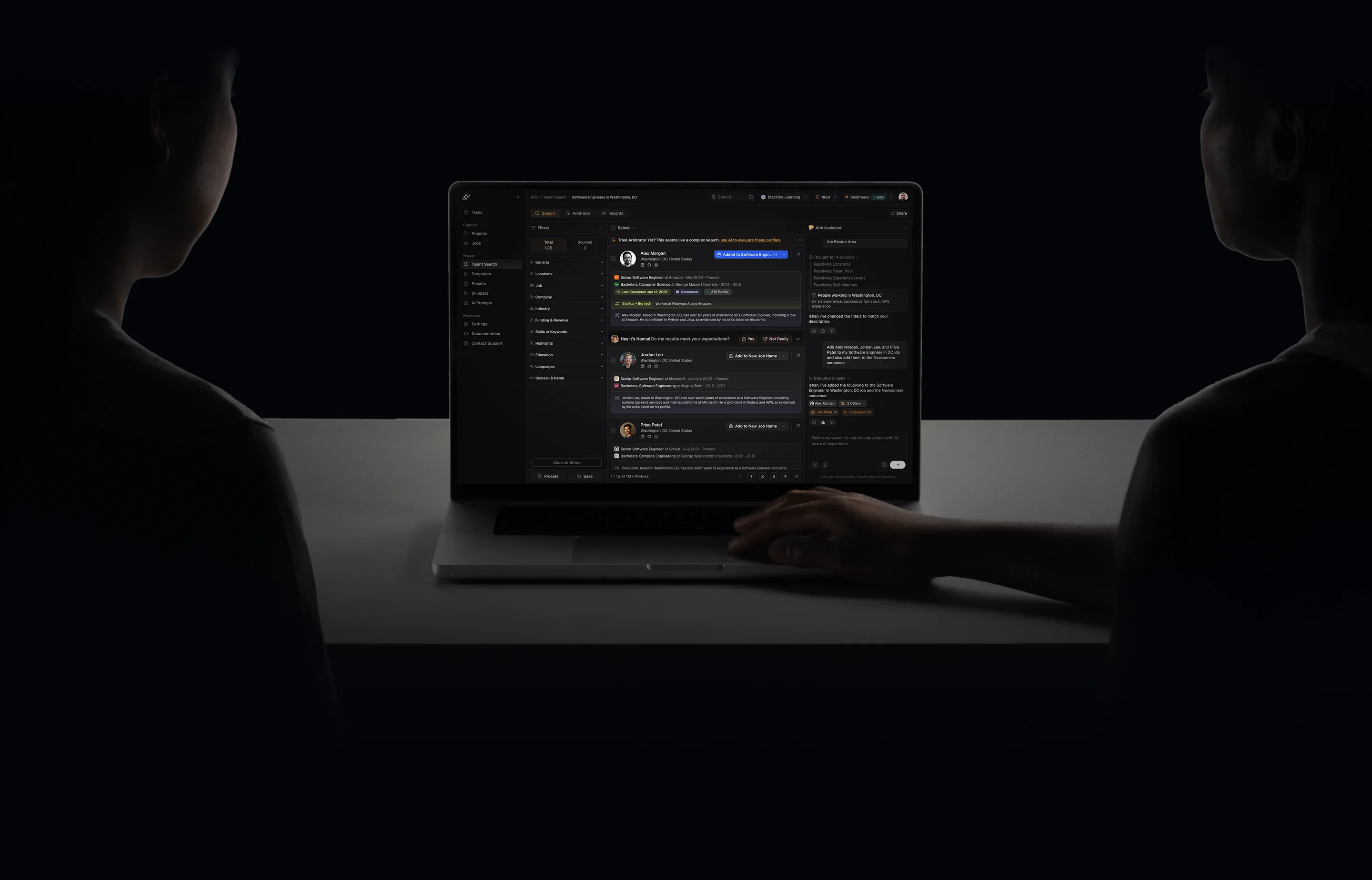
For teams managing large volumes, automation not only saves time but maintains focus and consistency at scale. Arbi by Neuroscale enhances this process further, applying AI agents that analyze contextual data for more confident shortlisting.
Enhancing Candidate Engagement with Personalized Outreach
Once top candidates are surfaced, personalization drives engagement. AI-powered outreach systems generate tailored messages reflecting each candidate’s background, skills, and interests. Personalized outreach uses contextual data—such as role fit and engagement history—to craft communication that feels relevant rather than formulaic.
Generative AI now scales this process responsibly, allowing human oversight while expanding precision outreach. Campaigns that once took hours can finish in minutes, improving reply rates by up to 30–40%. This blend of scale and authenticity improves employer-brand perception and accelerates offer acceptance for key roles. With Arbi, recruiters orchestrate multi-channel outreach sequences automatically while maintaining brand consistency and compliance controls.
Balancing Speed, Precision, and Fairness in AI Hiring
Rapid, precise AI systems also raise questions of fairness. Algorithmic bias—when automated systems replicate historic patterns—can skew outcomes if unchecked. The key is combining speed with equity through careful design and governance.
To maintain fairness, recruiters should:
-
Train models on diverse and representative datasets
-
Keep humans in the loop for reviewing edge cases
-
Regularly audit outcomes to ensure consistent treatment across demographics
A human-plus-AI configuration ensures automation enhances reach and precision without compromising ethical standards—an approach Neuroscale embeds deeply through transparent, auditable workflows.
Addressing Risks and Ethical Considerations in AI Recruiting
AI recruiting must meet ethical and legal standards across all activities. Risks include overreliance on automation, parser inaccuracies, limited transparency, and candidate manipulation. Compliance—aligning data processing with frameworks like GDPR, CCPA, and EEOC—anchors responsible AI use.
Best practices include clear documentation of automated decisions, bias monitoring, and escalation thresholds where AI defers to humans. Detection protocols also help flag manipulated or AI-generated resumes. These safeguards preserve integrity and accountability in every talent cycle, principles built into Arbi’s secure, compliant architecture.
Integrating AI Seamlessly into Existing Hiring Workflows
AI adoption should not disrupt established systems. Best-in-class recruiting AI connects directly with platforms like Greenhouse, Ashby, Lever, Bullhorn, Workday, Gmail, and Outlook, maintaining end-to-end compliance and security with standards such as SOC 2 Type 2 and ISO 27001+.
A practical integration roadmap includes:
-
Mapping recruitment stages to AI capabilities (screening, outreach, scheduling)
-
Integrating AI with ATS and communication tools via secure APIs
-
Monitoring data quality, bias, and performance continuously
A powerful example is talent rediscovery—where AI revisits archived applicants to identify strong fits for new roles, maximizing prior sourcing investments. Arbi by Neuroscale supports this via deep ATS integrations and automated candidate rediscovery pipelines.
Measuring the Impact of AI on Hiring Efficiency and Quality
To validate results, leaders must measure both efficiency and quality. Key indicators include:
-
Reduction in screening costs and time
-
Average time-to-hire
-
Candidate engagement and response rates
-
Conversion-to-hire ratios
-
Shortlist accuracy and diversity metrics
AI-driven systems can cut screening costs by up to 75%, double open rates, and significantly shorten recruiting cycles. Regular analysis of these metrics ensures hiring remains a measurable, data-validated discipline. Neuroscale’s Arbi platform captures these outcomes directly through built-in analytics for scientific performance tracking.
Future Trends in AI-Powered Talent Acquisition
The next phase of recruiting centers on autonomous agents orchestrating sourcing, screening, and outreach in real time. As more candidates use generative AI—nearly 80% now reference such tools in resumes—recruiters must evolve their evaluation criteria accordingly.
Compliance, fairness, and interpretability will become core differentiators. With 96% of HR leaders expecting AI to redefine acquisition practices, success will depend on combining human insight with auditable, AI-driven precision. Future-ready platforms like Arbi exemplify this balance—scaling intelligently while maintaining control, transparency, and fairness.
Frequently Asked Questions
What is AI resume screening and how does it work?
AI resume screening uses machine learning to parse, match, and rank resumes against job criteria. Platforms such as Arbi by Neuroscale enable this process securely and efficiently.
How does AI improve the speed and quality of candidate shortlisting?
AI analyzes hundreds of resumes in seconds, identifying individuals whose skills and experience align with job needs—accelerating reviews and improving shortlist precision.
Can AI-driven outreach increase candidate response rates?
Yes. AI-powered outreach customizes messages using candidate data, often increasing response rates by up to 40% with tools like Arbi’s multi-channel sequencing.
How do recruiters maintain control and fairness with AI tools?
Recruiters ensure fairness by reviewing outputs, applying human judgment to final decisions, and auditing results—an approach supported by Neuroscale’s transparent AI frameworks.
What are the main challenges when implementing AI in recruitment?
Main challenges include addressing bias, ensuring compliance, detecting manipulated content, and integrating advanced AI without disrupting existing systems—a problem Arbi solves through deep, secure integrations.